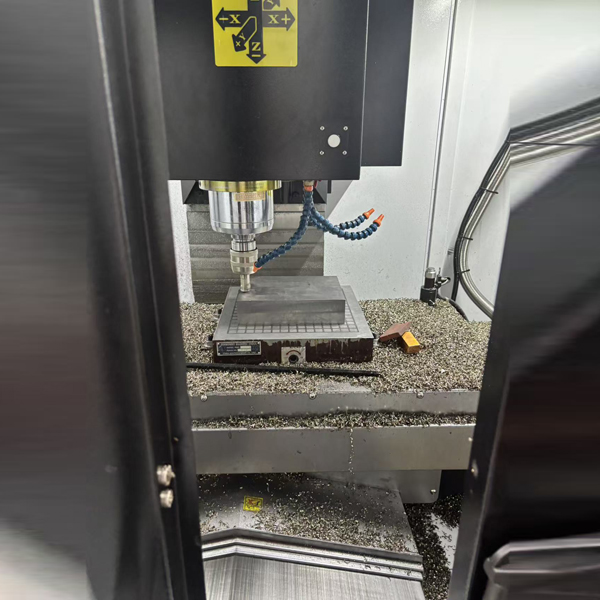
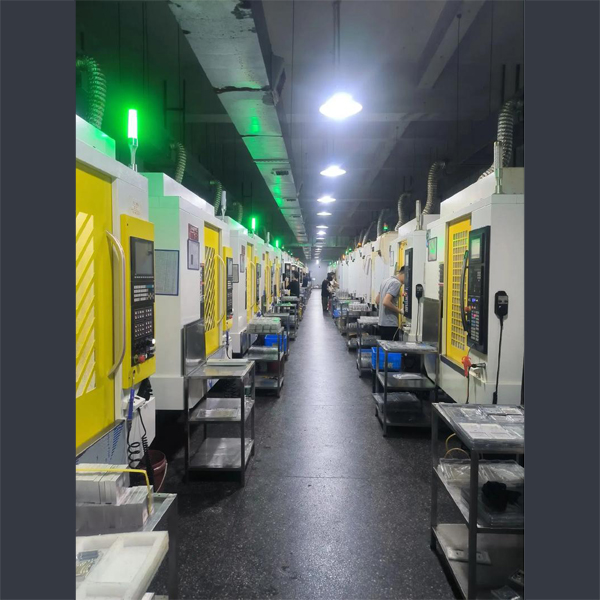
CNC Machining Services (Computer Numerical Control Machining) is a highly precise, automated manufacturing process that uses computerized controls and machine tools to remove material from a solid block (known as a workpiece or blank) to create custom-designed parts. It is a subtractive manufacturing method, meaning it shapes the final product by systematically cutting away unwanted material.
Here is a comprehensive introduction to CNC Machining Services:
️ How CNC Machining Works
The process relies on a seamless integration of software and hardware, generally following these steps:
1. Designing (CAD): Engineers use Computer-Aided Design (CAD) software to create a detailed 2D or 3D model of the desired part, including exact dimensions and tolerances.
2. Programming (CAM): The CAD file is imported into Computer-Aided Manufacturing (CAM) software. This software translates the design into a set of instructions (G-code) that dictates the movement, speed, and depth of the cutting tools.
3. Machine Setup: The CNC machine is prepared by securing the raw material (workpiece) and loading the necessary cutting tools.
4. Execution: The machine reads the programmed instructions and automatically executes the cutting operations with minimal human intervention, ensuring high repeatability and accuracy.
Key Advantages
CNC machining is a cornerstone of modern manufacturing due to its numerous benefits:
· High Precision & Accuracy: It can achieve extremely tight tolerances (often down to microns), making it ideal for parts where exact specifications are critical.
· Complex Geometry: Multi-axis machines (such as 3-axis, 4-axis, and 5-axis) can produce intricate shapes, curves, and features that are difficult or impossible to achieve with manual machining.
· Consistency & Repeatability: Once a program is verified, the machine can produce thousands of identical parts with virtually no variation.
· Material Versatility: It is compatible with a vast range of materials, including metals (aluminum, steel, titanium, brass) and plastics (ABS, Polycarbonate, Nylon, PEEK).
· Efficiency: The automated nature of the process allows for continuous operation, reducing production time and labor costs, especially for medium to high-volume runs.
Common Applications & Industries
Because of its precision and reliability, CNC machining services are utilized across a wide array of demanding industries:
· Aerospace: Manufacturing critical components like turbine blades, landing gear parts, and structural fuselage elements that require strict tolerances and high strength-to-weight ratios.
· Automotive: Producing engine blocks, transmission housings, suspension components, and custom prototypes for rapid development cycles.
· Medical Devices: Creating surgical instruments, orthotics, and custom implants (like knee or dental implants) where biocompatibility and exact dimensions are vital for patient safety.
· Electronics: Machining precise enclosures, heat sinks, connectors, and internal components for consumer electronics and industrial equipment.
· Prototyping: It is a preferred method for rapid prototyping, allowing engineers to quickly turn digital designs into functional, physical models for testing and validation.
️ Types of CNC Operations
CNC services encompass several different machining processes, with the most common being:
· CNC Milling: The workpiece is held stationary while a rotating cutting tool moves along multiple axes to remove material.
· CNC Turning: The workpiece is rotated on a spindle while a stationary cutting tool shapes it, typically used for creating cylindrical parts.
· Swiss Machining: A specialized type of turning ideal for producing small, complex, and high-precision parts, often used in the medical and electronics sectors.
In summary, CNC machining services provide a highly reliable, accurate, and versatile solution for transforming raw materials into functional parts, serving as a critical link between product design and mass production.